

 English
 日本語
 Español



Shen Yueqiao — After-Sales Quality Support Supervisor

Home / Author / Shen Yueqiao — After-Sales Quality Support Supervisor / Perforated Memory Foam Mattress: Breathable Comfort, Stable Support, and Flexible Everyday Use
Product Category
NEW Category
Contact us
Perforated Memory Foam Mattress: Breathable Comfort, Stable Support, and Flexible Everyday Use
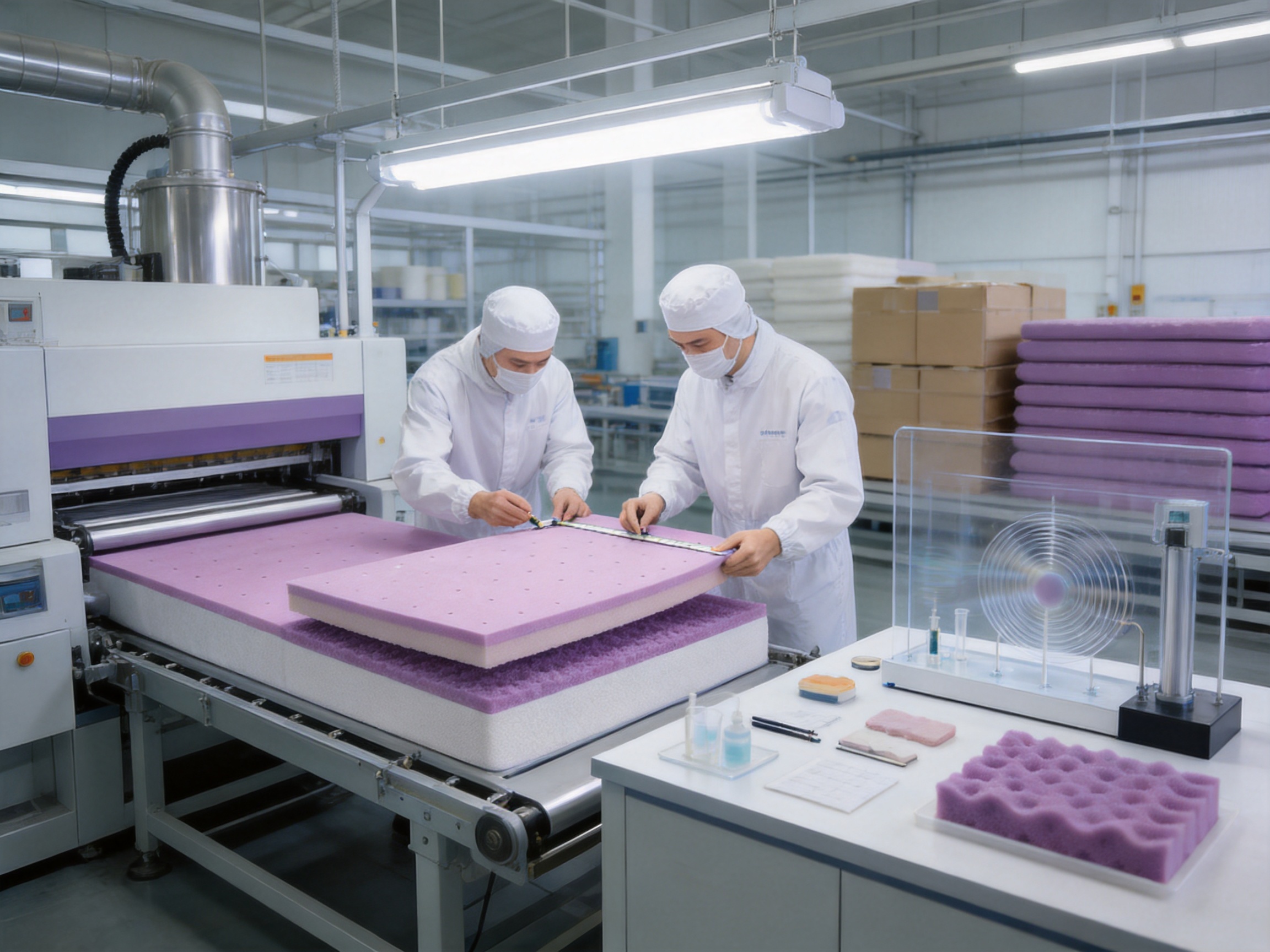
A mattress is more than a soft surface for sleeping. It influences body alignment, pressure distribution, temperature comfort, room aesthetics, storage convenience, and the overall quality of rest. For this reason, buyers increasingly look beyond basic cushioning and consider the material structure, ventilation design, durability, portability, and suitability for different sleeping environments.
The perforated memory foam mattress described in this article combines high-density memory foam with an evenly perforated surface, a practical 50-millimeter thickness, and a lightweight Japanese-style format. Designed for a 1.0-meter bed, it can also be placed on a bed frame, tatami mat, or clean floor. Its violet color and subtle polka dot pattern provide a simple visual accent, while the slow-rebound foam is designed to follow the body's contours and help distribute pressure.
This product is manufactured by Jiangsu Wellcare Household Articles Co., LTD., a company with a long history in foam material research, product development, and international supply. The manufacturer’s capabilities include ordinary sponge, memory foam, gel foam, temperature-insensitive memory foam, quick-dry memory foam, flame-retardant sponge, antibacterial sponge, and other foam solutions. Its research-oriented approach supports the development of products for household, hospitality, commercial, and cross-border markets.
The following guide explains the mattress’s construction, benefits, application scenarios, competitive advantages, manufacturing strengths, quality considerations, and maintenance recommendations. It is intended for distributors, importers, retailers, hospitality purchasers, and consumers who want to understand the practical value of a breathable memory foam sleeping product.
1. Product Overview
The perforated memory foam mattress is a compact sleep product made primarily from high-density memory foam. Its dimensions are 190 by 100 by 5 centimeters, making it suitable for a single bed measuring approximately 1.0 meter wide. The 50-millimeter thickness gives it a low-profile structure that is easier to handle than a thick traditional mattress.
Unlike a conventional solid foam slab, this product uses evenly distributed perforations across the surface. These openings are intended to promote air movement through the upper material, helping reduce the heat and stuffiness that some sleepers experience with dense foam. The perforated construction also gives the mattress a visually distinctive surface and supports a more breathable sleeping environment.
The memory foam is engineered to respond gradually to body weight and warmth. Instead of immediately pushing back with a strong spring-like reaction, slow-rebound foam compresses progressively under pressure. This allows it to conform to areas such as the shoulders, hips, waist, and lower back. When the pressure is removed, the material gradually returns toward its original form.
The product uses a violet color scheme with a restrained polka dot pattern. Its appearance is suitable for modern bedrooms, guest rooms, dormitories, guesthouses, temporary accommodation, and hotel-related environments. Because it does not require complicated assembly, it can be opened, positioned, and used with minimal preparation.
| Product Attribute | Specification |
| Product Type | Perforated memory foam mattress |
| Material | Memory foam |
| Thickness | 50 millimeters |
| Dimensions | 190 × 100 × 5 centimeters |
| Recommended Bed Size | 1.0-meter single bed |
| Color | Violet |
| Style | Minimalist modern |
| Season | All seasons |
| Brand | Wellcare |
| Item Number | m032 |
| Custom Processing | Available |
| Primary Material | High-density memory foam |
| Fabric Material | None specified |
2. How the Memory Foam Structure Supports Sleep
2.1 Slow rebound and body conformity
The primary comfort feature is the slow-rebound behavior of memory foam. When a person lies down, body weight creates different pressure levels across the sleeping surface. A firm, non-conforming material may concentrate pressure at the shoulders, hips, knees, and lower back. A properly formulated memory foam layer can compress more where pressure is greater and less where pressure is lower.
This progressive response helps create a closer contact area between the sleeper and the mattress. By spreading contact across a broader surface, the mattress may help reduce the feeling of concentrated pressure. It can also provide a more stable sensation for sleepers who prefer a gently enveloping surface rather than the quick pushback associated with some spring or conventional foam products.
The product is designed to provide stable yet gentle support. This distinction is important. Comfort does not simply mean softness. A sleeping surface that is excessively soft may allow the body to sink unevenly, while a surface that is excessively firm may produce uncomfortable pressure points. The purpose of a high-density slow-rebound material is to combine cushioning with controlled resistance.
2.2 Support for the lower back
The lower back often requires balanced support because it bridges the upper body and the pelvis. When a mattress does not conform sufficiently, a gap can remain beneath the waist for some sleeping positions. When a mattress conforms too deeply or lacks structural stability, the pelvis may sink too far. A well-designed memory foam surface attempts to respond gradually to these differences in body shape.
The 50-millimeter format is particularly practical as a comfort layer, floor mattress, guest mattress, or surface placed over a supportive base. The underlying foundation still affects the final sleeping feel. A rigid, even base can help the foam perform more consistently, while an uneven or damaged base may reduce comfort regardless of the quality of the foam.
2.3 Shock absorption and movement management
Memory foam is also valued for its ability to absorb and dampen movement. When one person turns over or changes position, the movement may be less likely to travel across the entire surface than it would on some highly responsive materials. This can be useful in guest rooms, shared sleeping spaces, dormitories, and accommodation settings where reducing disturbance is desirable.
Movement control depends on the sleeper’s weight, the base, the foam formulation, and the overall construction. The perforated design is primarily intended to improve ventilation, but the dense foam beneath the perforations continues to provide the slow-response characteristics associated with memory foam.
3. The Advantages of Perforation
3.1 Improved air circulation
Dense foam can retain warmth because its structure contains many small cells and does not naturally behave like an open coil system. The perforated surface addresses this issue by creating channels through which air can move. As the sleeper changes position, air can be displaced through the openings, helping reduce the stagnant, enclosed feeling sometimes associated with solid foam.
Ventilation is especially valuable in warm climates, rooms with limited airflow, dormitories, guesthouses, and accommodation environments with frequent use. The perforations do not transform the mattress into an active cooling system, but they offer a practical passive method for supporting air movement.
3.2 More comfortable use across seasons
The mattress is specified for all-season use. In warmer weather, the perforations may help reduce stuffiness, while in cooler weather the memory foam continues to provide a cushioning layer without requiring a complicated seasonal conversion. Users can also combine the mattress with breathable sheets, mattress protectors, and suitable room ventilation to further improve comfort.
Seasonal performance depends on more than the mattress alone. Room temperature, humidity, bedding material, body temperature, and personal preference all influence the sleeping experience. Nevertheless, a breathable foam structure gives the product a useful advantage over a completely solid foam surface.
3.3 Practical balance between comfort and portability
Perforations can reduce the overall material density in selected areas while preserving the basic shape and function of the foam layer. In a 50-millimeter mattress, this contributes to a structure that is relatively easy to move, fold or position compared with a full-height mattress. The product is therefore suitable for users who need comfort but cannot accommodate a heavy, permanently installed mattress.
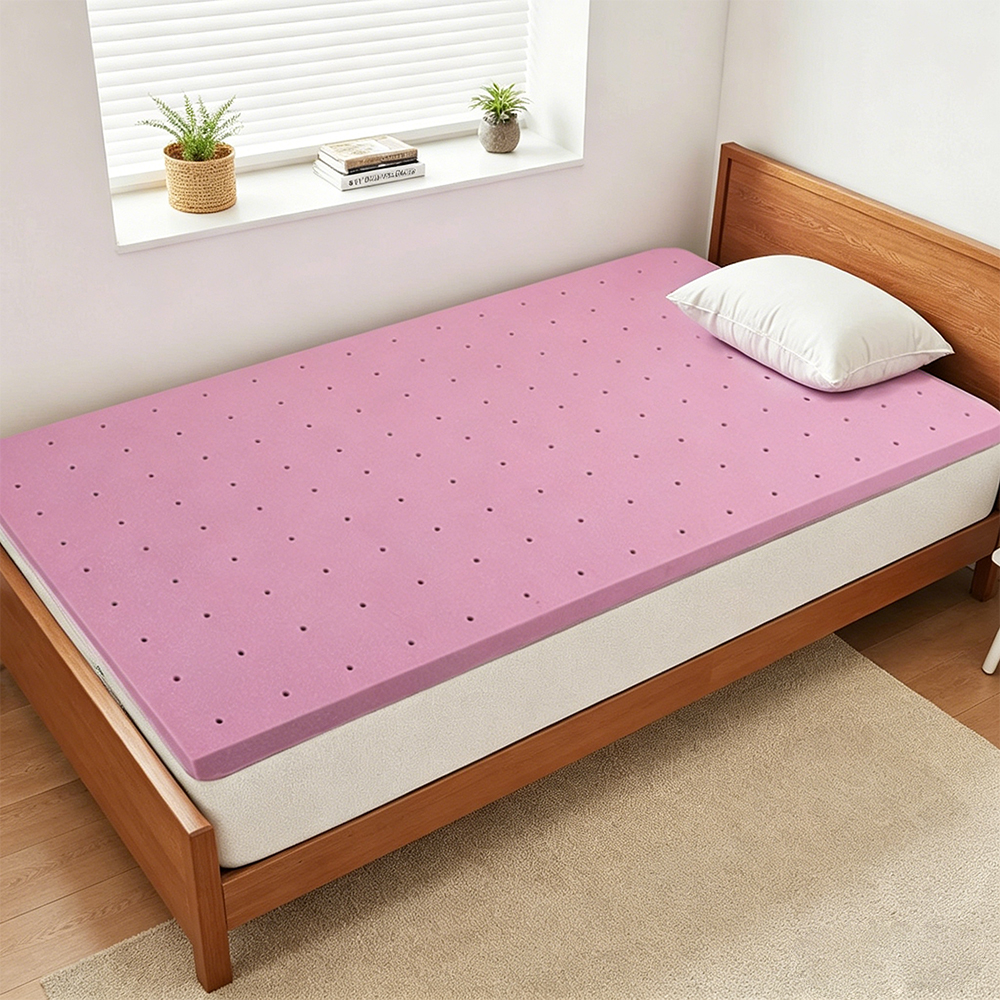
Perforated memory foam mattress
4. Competitive Advantages Over Conventional Alternatives
4.1 Compared with basic sponge mattresses
Traditional low-density sponge products may be affordable and lightweight, but they can provide less precise body conformity and may lose resilience more quickly under repeated loading. The high-density memory foam used in this product is intended to deliver more controlled compression and slow rebound.
For distributors and retailers, the distinction is important because consumers increasingly understand the difference between ordinary sponge and memory foam. A product that combines a recognized pressure-relieving material with a breathable structure can be positioned in a more functional segment than a basic foam pad.
4.2 Compared with solid memory foam mattresses
A solid memory foam mattress may offer contouring comfort, but some users experience heat accumulation or a closed-in feeling, particularly in warm climates. The perforated version is designed to improve air movement without abandoning the slow-rebound characteristics of memory foam.
The perforated structure can therefore appeal to buyers who want the body-conforming behavior of memory foam but are cautious about heat retention. This makes it suitable for regions with warm summers, humid conditions, or limited air conditioning.
4.3 Compared with bulky traditional mattresses
Many traditional mattresses are difficult to transport, rotate, store, and install. They may require a dedicated bed frame and additional handling during delivery. This product’s lightweight and low-profile structure offers a more flexible alternative for temporary rooms, dormitories, guest accommodations, and households that need an occasional sleeping surface.
Its ability to rest directly on a bed frame, tatami mat, or clean floor allows purchasers to reduce installation complexity. This is especially useful for short-term accommodation providers and furniture retailers that want a product with broader usage scenarios.
4.4 Compared with highly responsive spring surfaces
Spring mattresses can provide strong rebound and airflow, but some users prefer the quieter, more stable sensation of foam. The memory foam surface absorbs a portion of movement and does not produce the same level of spring response. For sleepers who prefer a calmer sleeping surface, this can be an important advantage.
The choice between foam and springs remains personal. The value of this product lies in its clear positioning: slow-rebound contouring, low-profile portability, and improved ventilation through perforations.
4.5 Compared with thick premium mattresses
A thick premium mattress may contain multiple layers and elaborate construction, but it can also require a larger budget, more delivery space, and a fixed bedroom arrangement. A 50-millimeter mattress is not intended to replace every full-height mattress. Instead, it offers a practical solution where users need a comfortable additional layer, a guest sleeping surface, a dormitory mattress, or a portable product.
This narrower but highly practical positioning can be valuable in wholesale and cross-border markets. Retailers can present it as an accessible memory foam option for consumers who want the material benefits of memory foam without purchasing a large, heavy mattress.
5. Flexible Application Scenarios
5.1 Everyday home sleeping
For a 1.0-meter single bed, the mattress provides a simple upgrade path. It can be placed on a suitable base to add contouring comfort and pressure distribution. The violet appearance is distinctive without being visually aggressive, and the minimalist design can fit modern interiors.
In small bedrooms, the low-profile format can make the room feel less crowded than a bulky mattress. It can also be easier to remove temporarily when the space serves multiple purposes.
5.2 Guest rooms and temporary accommodation
Guest rooms require products that are comfortable, easy to clean, simple to replace, and convenient to store. A portable memory foam mattress can be kept available for visitors and positioned only when needed. Its ability to work on different surfaces provides flexibility when room layouts change.
Guesthouses and short-term rental properties may also value the product’s appearance. The violet color and simple pattern create a finished visual impression, reducing the need for additional decorative layers in casual accommodation settings.
5.3 Student dormitories
Dormitory users often face limited space, shared rooms, variable bed quality, and a need to move during school breaks. A lightweight foam mattress is easier to carry than a traditional mattress and can be used as a comfort layer over an existing dormitory bed.
The product’s 100-centimeter width is suited to a single sleeping arrangement, while its 190-centimeter length fits many standard single-bed configurations. Buyers should still verify the exact bed frame dimensions before ordering.
5.4 Hotels and commercial lodging
Commercial accommodation providers often need reliable, repeatable products that can be supplied in quantity. A manufacturer with experience supplying international markets and five-star hotel customers can offer useful production knowledge for hospitality purchasing.
The mattress may be used in guest rooms, staff accommodation, temporary housing, or as an additional comfort layer. Its simple structure can make inventory management more straightforward than products with numerous mechanical components.
5.5 Floor sleeping and tatami-style rooms
Because it can be placed on a clean floor or tatami mat, the mattress is suitable for low-platform and floor-based sleeping arrangements. This makes it relevant to minimalist interiors, flexible living spaces, family guest areas, and rooms that are occasionally converted from another use.
When using any mattress directly on the floor, users should provide adequate ventilation underneath, especially in humid environments. Periodic lifting and airing can help reduce the risk of trapped moisture.
5.6 Retail and cross-border distribution
The product is identified as suitable for cross-border export supply and can be marketed through platforms such as eBay, Amazon, Wish, AliExpress, independent websites, Lazada, and other channels. Its compact design and clear functional benefits are suitable for online product presentation.
For online retailers, the key selling points include high-density memory foam, perforated breathability, slow rebound, low-profile portability, all-season use, and compatibility with different bases. Clear dimension information is essential because mattress sizing differs between countries and regions.
6. Manufacturing and Research Strengths
6.1 Long-term focus on foam materials
Jiangsu Wellcare Household Articles Co., LTD. was founded in 2003 and focuses on the research, development, and manufacturing of high-performance sleep materials and healthy home products. This specialization is significant because foam performance depends heavily on formulation, density control, cell structure, rebound behavior, and processing consistency.
The manufacturer’s background is connected to a longer research history beginning in 1993 as a school-run scientific research enterprise. This foundation supports a development culture centered on material innovation rather than simple product assembly.
6.2 Doctor-led research and development
The company reports that it is led by a doctor-led research and development team and develops more than one hundred new foam materials each year. Such a research structure can support systematic experimentation with density, hardness, resilience, airflow, temperature response, flame resistance, antibacterial performance, and other characteristics.
For a memory foam mattress, research capability matters because comfort is not determined by one feature alone. The foam must achieve a balance among slow rebound, support, recovery, durability, odor control, processing stability, and user comfort. A specialized research team is better positioned to refine these factors than a manufacturer that purchases generic foam without in-house material expertise.
6.3 Broad foam technology portfolio
The company’s stated portfolio includes ordinary sponge, memory foam, gel foam, temperature-insensitive memory foam, quick-dry memory foam, flame-retardant sponge, antibacterial sponge, and other specialized materials. This breadth provides a foundation for customization and product differentiation.
For buyers seeking private-label or custom solutions, a broad material portfolio can make it easier to select a foam type for a specific market. For example, a hot-climate market may prioritize ventilation and quick-drying behavior, while a hospitality customer may focus on durability, fire performance, and consistent large-volume supply.
6.4 Factory development and production scale
The company purchased a 12,000-square-meter factory building in 2003 and later acquired 50,000 square meters of land in 2008. These investments demonstrate a long-term commitment to physical production capacity and provide a foundation for manufacturing, storage, development, and order fulfillment.
Large-scale facilities can support more organized production flows, raw material management, quality inspection, packaging, and export preparation. For international buyers, production infrastructure is an important consideration because delivery performance depends not only on product design but also on manufacturing organization.
6.5 International market experience
The company’s products were supplied to cross-border supermarkets in the United States, Germany, and Japan by 2010 and were later exported to the United Kingdom, Canada, Australia, and Kuwait. This international exposure indicates experience with different market expectations, packaging requirements, product specifications, and distribution channels.
International market experience can benefit purchasers that need a supplier capable of communicating about export products, customized specifications, documentation, and regional preferences. It also provides a practical understanding of the demands associated with long-distance transport and online retail.
6.6 Hospitality supply experience
In 2020, the company became a designated supplier for five-star hotels. Although the perforated memory foam mattress is a specific product with its own specifications, hospitality supply experience can support strong awareness of consistency, appearance, repeat orders, and service requirements.
Hotels and accommodation businesses often need products that maintain a uniform guest experience across multiple rooms. A manufacturer accustomed to this environment is more likely to understand the importance of stable specifications and production repeatability.
6.7 Sustainability and environmental management
The company also reports investment in eco-friendly energy systems and improved environmental management practices. Responsible manufacturing is increasingly important for international buyers, retailers, and hospitality groups that evaluate their supply chains based on environmental impact as well as price and performance.
Environmental responsibility does not eliminate the need for buyers to request specific compliance documents or material certifications for their target market. However, a stated commitment to energy systems and environmental management provides a positive foundation for further supplier evaluation.
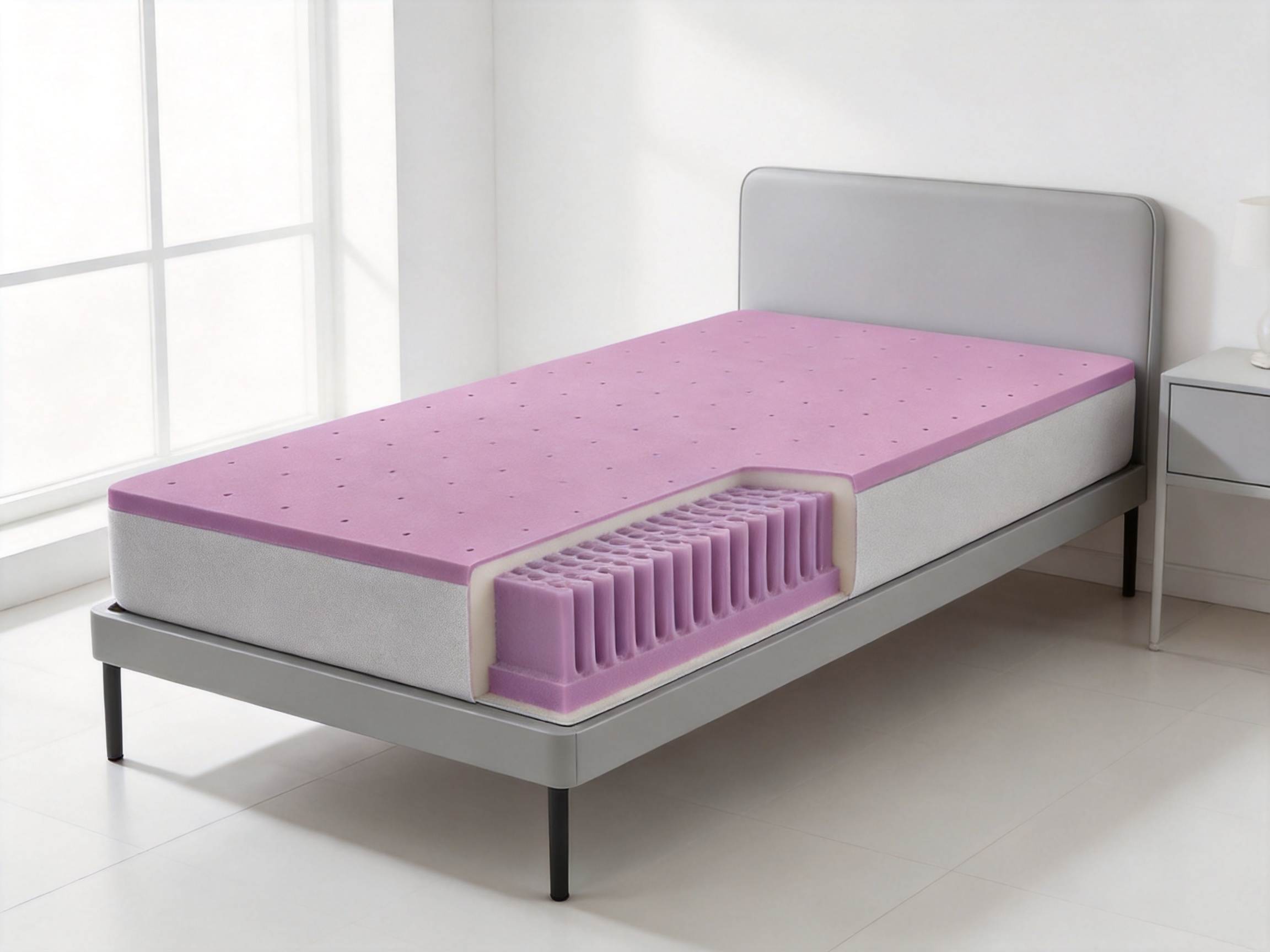
7. Production Considerations for a Perforated Memory Foam Mattress
7.1 Foam formulation
The first stage of product performance begins with the foam formulation. The ratio and type of raw materials influence density, firmness, rebound speed, durability, odor, and temperature response. A manufacturer with experience in multiple foam categories can adjust formulations according to the intended market and product positioning.
For this mattress, the formulation must support slow rebound while retaining enough structural stability for a 50-millimeter layer. If the material is too soft, it may feel unstable. If it is too firm, it may not provide the desired contouring effect. Consistent formulation is therefore essential for repeat orders.
7.2 Molding and dimensional control
After formulation, the foam must be produced into a stable block or slab and processed to the required dimensions. The final target is 190 by 100 by 5 centimeters. Dimensional accuracy supports proper fit on standard single beds and reduces customer complaints related to gaps, overhang, or uneven edges.
Thickness consistency is also important. A mattress with significant variation across its surface may provide an inconsistent sleeping feel. Professional production control includes attention to cutting accuracy, surface flatness, edge condition, and recovery after compression.
7.3 Perforation design
The perforations must be distributed evenly to support ventilation without weakening the foam excessively. Hole size, spacing, depth, and placement can all affect airflow, surface feel, and structural integrity. An effective perforation process should produce consistent openings across the usable area.
Perforations must also be cleanly formed. Rough edges, collapsed openings, or irregular spacing can affect appearance and may reduce the perceived quality of the product. Consistent tooling and inspection are therefore important parts of production.
7.4 Surface appearance
The violet color and simple polka dot pattern contribute to the product’s visual identity. Color consistency is particularly important for wholesale and hospitality orders because products displayed or used together should appear uniform.
Appearance inspection may include checking color variation, pattern clarity, surface defects, stains, tearing, deformation, and packaging marks. While visual design does not replace functional quality, it plays a significant role in customer perception and online sales presentation.
7.5 Compression, packaging, and recovery
Foam products are often compressed or packed to reduce shipping volume. The packaging method must protect the mattress from contamination and damage while allowing the material to recover after opening. Buyers should follow the supplier’s unpacking and recovery instructions and allow adequate time for the product to return to its intended shape.
During export, packaging must also account for humidity, temperature changes, handling, and extended storage. Suitable protective materials and clear labeling can reduce the risk of damage during transit.
7.6 Quality inspection
Quality inspection for a perforated memory foam mattress may include dimension checks, thickness checks, surface inspection, perforation consistency, rebound evaluation, density verification, packaging inspection, and odor assessment. Specific testing requirements should be agreed upon between the buyer and supplier before production.
For commercial orders, a written specification sheet can define acceptable tolerances and inspection methods. This helps ensure that both parties have the same understanding of product requirements and reduces uncertainty during repeat purchasing.
8. Customization and Procurement Options
The product information identifies custom processing as available. This creates potential opportunities for buyers who need adjustments to color, dimensions, packaging, logo treatment, perforation design, or material characteristics. The feasibility of each customization should be confirmed in advance because changes may affect tooling, minimum order quantities, lead time, and cost.
8.1 Dimensions
Although the standard product measures 190 by 100 by 5 centimeters, some markets use different single-bed sizes. Custom dimensions may help retailers serve regional bed standards or specific hospitality requirements. Accurate measurement is essential because even a small difference can affect fit.
8.2 Color and pattern
The violet color and polka dot design create a recognizable appearance, but buyers may prefer neutral shades such as white, gray, beige, or blue. A customized color strategy can help align the mattress with a retailer’s product range or a hotel’s interior style.
8.3 Material performance
Buyers may request specialized foam characteristics, including improved ventilation, temperature-insensitive response, quick-dry behavior, antibacterial properties, or flame-retardant performance. The manufacturer’s broader foam portfolio may support these discussions, subject to technical feasibility and certification requirements.
8.4 Packaging and labeling
Retail packaging can be adapted for online sales, warehouse distribution, or hotel procurement. Options may include carton design, multilingual labels, barcodes, care instructions, product inserts, and private-label packaging. Clear packaging information should include dimensions, material, unpacking guidance, and usage limitations.
9. Care and Maintenance Recommendations
Proper care can help preserve the mattress’s comfort and appearance. Users should place it on a clean, level base and avoid positioning it on sharp or abrasive surfaces. If it is used directly on the floor, the underside should be aired regularly to reduce moisture accumulation.
A breathable mattress protector can help protect the foam from perspiration, dust, stains, and accidental spills. The protector should not be so tightly fitted or impermeable that it significantly restricts the intended airflow at the perforated surface.
Users should avoid folding the mattress sharply for long periods unless the manufacturer specifically approves that storage method. A tight fold can create stress at the same points repeatedly and may affect the material’s recovery. When moving the product, it is preferable to support it evenly rather than pulling it by a single edge.
Memory foam should not be exposed to excessive heat, open flames, harsh chemicals, or prolonged direct sunlight. Cleaning should follow the supplier’s instructions. In general, surface cleaning and adequate ventilation are preferable to soaking the foam, because excessive moisture may be difficult to remove completely.
New foam products may have a temporary manufacturing odor after unpacking. Placing the mattress in a well-ventilated area before use can help dissipate this odor. Buyers with strong sensitivities should consider airing the product for an appropriate period and should confirm applicable material and emissions requirements for their market.
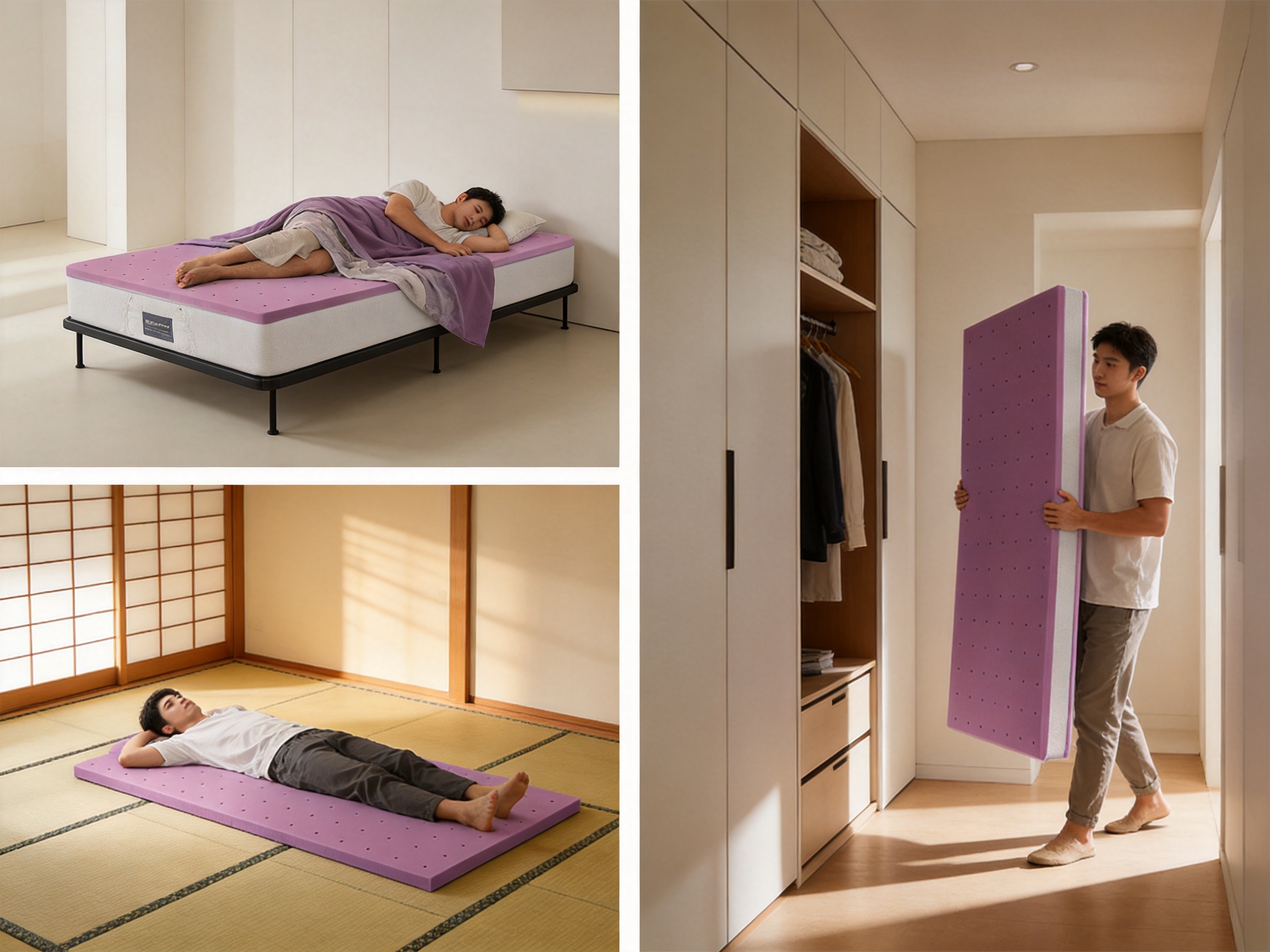
10. Buying Guidance for Distributors and Retailers
10.1 Confirm the target customer
The mattress can serve several customer groups, but marketing should identify the primary use case. A retailer may present it as a single-bed memory foam mattress, a breathable topper, a dormitory solution, a guest mattress, or a portable floor mattress. Each positioning emphasizes different benefits.
For warm-climate customers, ventilation and all-season use may be the strongest messages. For students and small-space residents, portability and storage may be more persuasive. For hospitality buyers, consistency, customization, and supply capability may matter most.
10.2 Confirm bed compatibility
The standard size is 190 by 100 centimeters. Retailers should display this information prominently and explain that bed dimensions can vary by region. Customers should measure the internal length and width of the bed frame before purchase.
It is also useful to explain that a 50-millimeter product is a low-profile mattress or comfort layer rather than a thick multi-layer mattress. Accurate product positioning helps create realistic expectations and improves customer satisfaction.
10.3 Request samples for evaluation
Before placing a large order, commercial buyers should evaluate a sample. The evaluation can include surface feel, rebound speed, odor, dimensions, perforation quality, edge stability, packaging, and recovery after unpacking.
For hospitality or wholesale use, buyers may also test multiple samples from different production batches to assess consistency. A supplier can provide technical information and agreed quality standards to support this process.
10.4 Review documentation
Importers should confirm the documents required by the destination market. These may include product specifications, packing lists, commercial invoices, safety information, material declarations, test reports, labeling requirements, or other regulatory documents. Requirements differ according to country, product classification, and sales channel.
Buyers should not rely solely on general marketing statements when a particular certification or performance claim is legally required. Instead, they should request current documentation that applies to the specific product and destination.
10.5 Plan logistics and storage
Because foam products may be compressed for shipping, buyers should understand the packaging dimensions, carton quantity, container loading plan, storage conditions, and recommended recovery time. Warehouses should avoid prolonged exposure to excessive heat, moisture, and direct sunlight.
Online retailers should also consider how the product will be delivered to individual customers. Packaging must be sufficiently protective while remaining practical for parcel handling and last-mile delivery.
11. Why the Manufacturer Is a Strong Supply Partner
A product’s value is closely connected to the capabilities of its manufacturer. Jiangsu Wellcare combines material research, foam manufacturing experience, product customization, international export activity, and a broad application portfolio. This combination can provide advantages over suppliers that focus only on a narrow product category or outsource their core foam technology.
The company’s history in research-based development supports a deeper understanding of foam performance. Its portfolio of different sponge and memory foam materials offers a basis for product adaptation. Its factory investment supports production organization and capacity planning. Its experience with international markets provides familiarity with cross-border business requirements.
The company’s work with supermarkets, e-commerce platforms, export markets, and five-star hotels also demonstrates exposure to different purchasing environments. These customers may require different combinations of price, quality, appearance, customization, delivery, and documentation. Experience across these channels can make supplier communication more efficient.
In addition, the company reports ongoing investment in environmental management and eco-friendly energy systems. For buyers developing responsible sourcing strategies, this focus may support broader supply-chain objectives, although individual compliance requirements should always be confirmed through documentation.
12. Frequently Asked Questions
Q1: What is the standard size of this mattress?
The standard size is 190 centimeters long, 100 centimeters wide, and 5 centimeters thick. It is designed for a 1.0-meter single bed, but buyers should measure their bed frame before ordering.
Q2: Is this product a traditional thick mattress?
It is a low-profile memory foam mattress with a 50-millimeter thickness. It can be used as a compact mattress, guest mattress, floor mattress, or comfort layer, depending on the user’s needs and the support provided underneath.
Q3: What is the purpose of the perforations?
The perforations are designed to improve air circulation through the foam, helping reduce stuffiness and support a more breathable sleeping experience than a completely solid foam surface.
Q4: Does the mattress provide firm or soft support?
The product is described as providing soft support with stable cushioning. The exact perceived firmness depends on the sleeper’s body weight, sleeping position, room temperature, and the base beneath the mattress.
Q5: Can it be placed directly on the floor?
Yes, it can be placed on a clean floor, tatami mat, or bed frame. When used on the floor, regular lifting and ventilation are recommended to reduce moisture accumulation underneath.
Q6: Is it suitable for all seasons?
The product is specified for all-season use. Its perforated structure is intended to improve airflow, while the memory foam provides cushioning in different weather conditions. Bedding, room ventilation, and personal temperature preferences will also affect comfort.
Q7: Is the product suitable for dormitories?
Yes. Its single-bed dimensions, low profile, lightweight construction, and portability make it suitable for many student dormitory environments, provided the bed dimensions match.
Q8: Can the manufacturer provide customized products?
Custom processing is listed as available. Potential options may include dimensions, colors, packaging, material characteristics, and other specifications. Buyers should confirm feasibility, minimum order quantities, lead times, and technical requirements with the manufacturer.
Q9: What types of foam does the manufacturer develop?
The manufacturer reports experience with ordinary sponge, memory foam, gel foam, temperature-insensitive memory foam, quick-dry memory foam, flame-retardant sponge, antibacterial sponge, and other foam materials.
Q10: Is the product suitable for commercial accommodation?
It can be considered for guesthouses, hotels, temporary accommodation, staff rooms, and other commercial environments. Commercial buyers should evaluate samples, durability requirements, cleaning procedures, applicable regulations, and the desired supply quantity before ordering.
Q11: How should the mattress be maintained?
Use it on a clean, even surface, protect it with breathable bedding, avoid excessive heat and harsh chemicals, and provide regular ventilation, especially when it is placed directly on the floor.
Q12: What makes this product different from ordinary foam?
It combines high-density memory foam, slow rebound, body-conforming support, a perforated breathable structure, a low-profile portable format, and a modern violet design. These features provide a more specialized positioning than a basic sponge mattress.
13. Final Assessment
The perforated memory foam mattress is designed for buyers who want a practical combination of pressure-conforming comfort, breathable construction, portability, and flexible placement. Its high-density memory foam provides slow rebound and stable cushioning, while the evenly distributed perforations address one of the common concerns associated with dense foam: limited air movement.
The 190 by 100 by 5-centimeter format is especially suitable for single beds, dormitories, guest rooms, temporary accommodation, floor sleeping, and compact homes. Its low weight and simple installation make it easier to move and store than many thick conventional mattresses. The violet color and restrained pattern also give it a finished appearance for both residential and commercial environments.
From a sourcing perspective, the manufacturer offers more than a single mattress product. Its history in foam material research, broad technology portfolio, factory investment, international market experience, custom processing capability, and hospitality supply background provide a strong foundation for wholesale and private-label cooperation.
For consumers, the product offers an accessible way to experience memory foam comfort without committing to a large and heavy mattress. For retailers and distributors, it presents a clear product story built around breathable slow-rebound support and flexible use. For commercial buyers, its customization potential and manufacturer background may support larger, repeatable supply programs.
As with every mattress, the final choice should consider dimensions, sleeping position, preferred firmness, room climate, base support, maintenance practices, and applicable market requirements. When these factors are properly matched, a perforated memory foam mattress can provide a comfortable, adaptable, and commercially attractive sleep solution.
References
1. Product specification and descriptive materials for the perforated memory foam mattress, item number m032.
2. Manufacturer-provided information concerning memory foam, gel foam, temperature-insensitive foam, quick-dry foam, flame-retardant sponge, and antibacterial sponge development.
3. Manufacturer-provided company history, factory development information, export experience, and hospitality supply background.
4. General technical principles concerning viscoelastic memory foam, pressure distribution, rebound behavior, and passive ventilation in foam bedding.
5. General bedding care principles concerning moisture control, surface protection, ventilation, storage, and mattress base compatibility.
Product: Perforated memory foam mattress

PREV:Why a Green Striped Modular Sofa Bed Is a Smart Choice for Flexible Modern Living
NEXT:Ocean Cool Multifunctional Dog Bed: Cooling Comfort, Flexible Use, and Advanced Foam Manufacturing
NEXT:Ocean Cool Multifunctional Dog Bed: Cooling Comfort, Flexible Use, and Advanced Foam Manufacturing
Interested in cooperation or have questions?
Related News
WELLCARE was founded in 2003, boasting over a decade of profound and extensive experience.
Quick Links
Product
Media Centre
Contact Information
- wesley@wellcare-mattress.com
- +86-517-84998062
- +86-15152354988
- No. 168 Nenjiang Road, Huaiyin District, Huai'an City, Jiangsu Province, China
Copyright © Jiangsu Wellcare Household Articles Co., LTD. All Rights Reserved.
Custom Memory Gel Mattress Manufacturers
